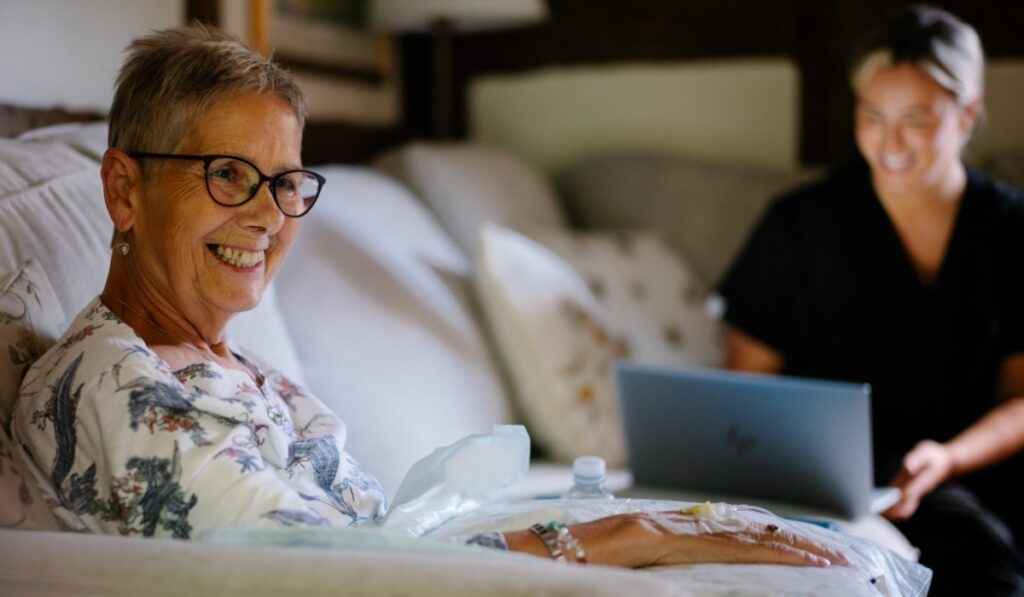
Your diagnosis, your choices: Is clinical treatment outside of hospital right for you?
A cancer diagnosis is a time of planning and looking forward. If you or a loved one have been diagnosed with cancer, then your priorities and focus has likely changed.
After the initial shock of a diagnosis, the practical reality sets in. You might find yourself questioning if the hours spent travelling to and waiting in hospitals are sustainable for you and your family. You might be wondering if there is a way to receive the clinical treatment you need without the disruption to your daily life.
For many patients with private medical insurance or those considering self-pay options, treatment in your home environment is a legitimate, safe, and empowering alternative.
The hidden burden of hospital treatment
For a patient undergoing regular cycles of Systemic Anti-Cancer Therapy (SACT), the hospital experience involves much more than the infusion itself. It involves navigating traffic or public transport while feeling fatigued. It involves finding parking spaces, sitting in waiting rooms, and interacting with different staff members at every visit.
For those trying to maintain a career or care for a young family, these hours away from home add up. The hospital environment, while necessary for acute phases of care, can also be a source of anxiety for many.
Having your cancer treatment at home can have a profound impact on your mental well-being and help you take control, to prioritise family life and work.
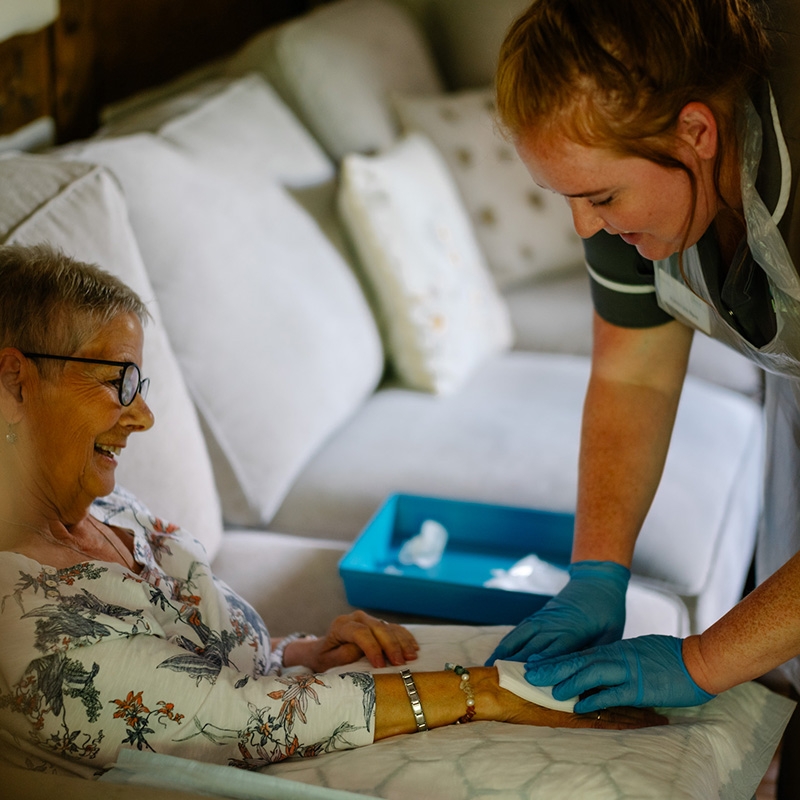
Private cancer treatment at home
There is a common misconception that treatment at home implies a step down in clinical standards. This is not the case. Our cancer nurses are highly trained and experienced specialists. We deliver 1-2-1 clinical treatment at home, with the equipment to respond as they would in hospital.
How it works
In this model, you remain under the care of your existing oncologist. They continue to make all clinical decisions, prescribe your medication, and monitor your progress. The difference lies in the delivery.
Instead of you travelling to them for every infusion or injection, a cancer nurse comes to you. These are highly trained professionals with specific expertise in administering cancer therapies. They bring all the necessary equipment, medication, and safety protocols directly to your home.

What treatments can be delivered?
Every cancer journey is unique, but many treatments can be safely administered at home. This includes:
- Chemotherapy: Many intravenous and subcutaneous chemotherapy regimens.
- Immunotherapy: Biological therapies that boost the body’s natural defences.
- Hormone Therapy: Injections often used for breast and prostate cancers.
- Supportive Care: Medications to manage side effects, such as anti-sickness drugs or line care for PICC lines and ports.
Safety and standards: Hospital-level care in your living room
Safety is naturally the primary concern for any patient considering alternatives to hospital care. It is important to know that private cancer support at home operates under strict governance frameworks.
Providers of these services are registered with the Care Quality Commission (CQC), the independent regulator of health and social care in England. This means Lloyds Clinical is inspected and held to the same fundamental standards of quality and safety as hospitals.
When a cancer nurse visits your home to administer chemotherapy, they follow rigorous protocols:
- Strict governance: We review all SACT treatments following strict protocols and processes via our clinical governance committee, with stringent emergency protocols and training.
- Personal Protective Equipment (PPE): Nurses wear appropriate protective clothing to ensure safety for both the patient and themselves.
- Safe Handling: Specialist ‘spill kits’ and specific waste disposal bins (often purple-lidded for cytotoxic waste) are provided to ensure hazardous materials are handled and removed correctly.
- Emergency Protocols: Nurses are trained to manage adverse reactions, such as anaphylaxis, and have direct lines of communication with your consultant and hospital team.
How to start the conversation
If you feel that clinical support options at home would improve your quality of life in 2026, the first step is a conversation with your oncologist. You do not need to change doctors to change where you receive treatment.
Many patients assume their consultant will offer this service if it is available, but often the consultant waits for the patient to express a preference.
We know the benefits of cancer care at home
Our specialist cancer services ensure private medically insured and self-paying patients who want an alternative to hospital can start their treatment faster. We consider all cancer treatments, including those not currently available in hospitals.