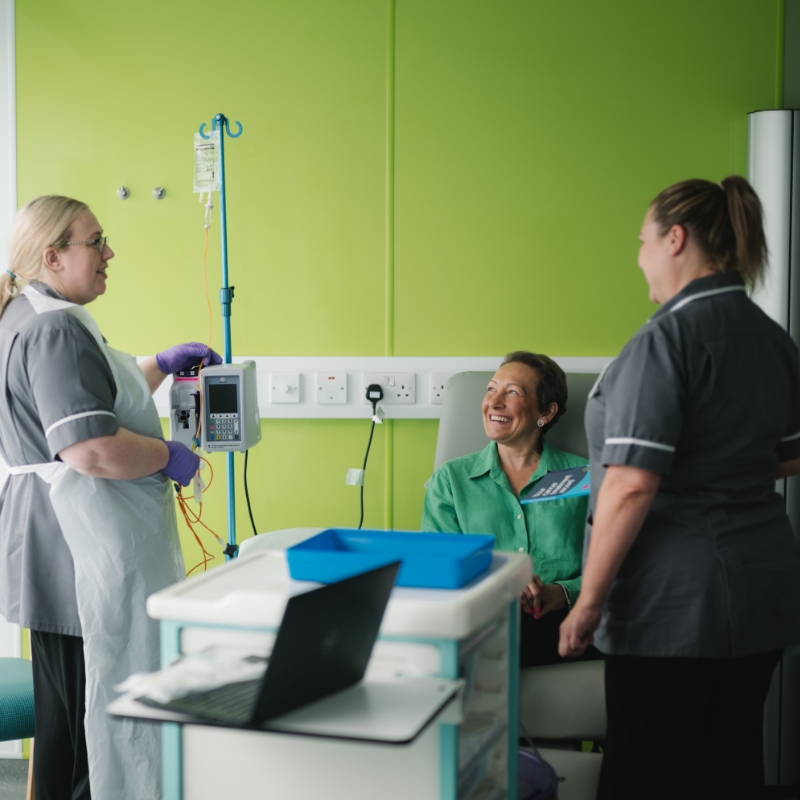
What NHS Confed 2026 made clear about care closer to home
Paul Barbour, Data & Insight Manager, Lloyds Clinical
NHS Confed 2026 offered a useful view of where the NHS sees its next phase of change. The pressures facing the service were hardly new. Workforce strain, financial constraint, rising demand and unequal access all featured heavily. What felt more settled, however, was the direction of travel. The language of recovery is beginning to fall away, replaced by a more practical conversation about reform, delivery and what the system will need if it is going to shift care in a meaningful way.
That shift in tone came through across the conference. Whether the focus was neighbourhood health, urgent care, data, innovation, mental health, medicines, workforce or prevention, the same themes kept resurfacing. More care will need to happen outside hospital. More services will need to be designed around people’s lives rather than organisational boundaries. More emphasis will be placed on proactive management, local delivery and stronger partnership working. For those of us involved in care outside hospital, the significance of that is hard to miss.
The NHS is asking tougher, more practical questions now. There is less interest in broad ambition and more focus on what can genuinely be delivered at scale, under pressure and in a way that holds together operationally. That is what made this year’s event particularly valuable. It did not simply reinforce long-standing ideas about care closer to home, it showed how firmly those ideas are now being tied to the future shape of service delivery.

These were five of the clearest insights
Care closer to home is becoming a core part of NHS delivery
One of the clearest messages from the conference was that moving care out of hospitals is no longer being treated as a longer-term aspiration sitting somewhere in the background of policy. It is moving into the foreground of NHS thinking and is increasingly being discussed as a practical necessity. That was evident in sessions on neighbourhood health, outpatient redesign, virtual wards, urgent care and long-term conditions. Although each discussion came at the issue from a slightly different angle, the overall picture was consistent. The NHS cannot continue to meet rising need through hospital-led models alone. More care will need to be delivered in community settings, more people will need to be supported earlier, and more treatment will need to be managed safely outside traditional hospital environments.For organisations like Lloyds Clinical, that matters because it changes the context in which care outside hospital is understood. Services that may once have been seen primarily as helpful extensions to mainstream provision are now much more closely aligned with how NHS leaders are thinking about resilience, access and long-term sustainability.
Workforce pressure is shaping reform as much as policy
If one issue sat underneath almost every discussion, it was the pressure on the workforce. The conference was notably candid about the scale of that challenge. Staff morale remains fragile in many parts of the system, clinical teams are carrying heavy operational burdens, and many organisations are trying to redesign services without the headroom that meaningful reform usually requires. That pressure is shaping the way service redesign is now being approached. The challenge is no longer confined to strategy or future planning. It now sits squarely in the day-to-day running of services, where reducing avoidable demand, protecting clinical time and managing risk safely have become immediate concerns. That is one reason care outside hospital is becoming increasingly relevant. When treatment can be delivered safely beyond the acute setting, when follow-up and monitoring can be handled differently, and when pathways are built around what patients need rather than institutional boundaries, the benefit is felt not only by patients but by the teams trying to keep services moving. Across the NHS, there is a growing need for care models that ease pressure on teams and are more workable to deliver in practice.
The NHS is becoming less tolerant of pilots that do not lead anywhere
Another strong theme running through the event was frustration with short-term innovation that never translates into lasting change. There was a repeated sense that the health service has spent too long trialling good ideas without creating the conditions for them to survive beyond a small local footprint. Speakers returned several times to the problem often described as “pilotitis”. A promising model is launched, local support builds, funding is found for a limited period and early results are encouraging, yet the work stalls because the route into mainstream commissioning was never agreed, the funding model remains unclear, or no one has addressed how the service would scale in practice. That mood is shifting. NHS leaders are showing a stronger preference for delivery models that can demonstrate outcomes, move across multiple sites and prove their value under real service pressures. There is less appetite for isolated point solutions and more interest in approaches that can support whole pathways and fit into live operational environments. For external partners, that raises the bar, but in a useful way, because it creates more space for models built to last rather than ideas designed only to test a concept.
Data and digital maturity will shape how far reform can go
The conference also made clear that the next phase of NHS reform will depend heavily on better use of data and stronger digital capability. The ambition is easy enough to understand. The health service wants to move away from reacting to visible demand and towards identifying risk earlier, managing more proactively and intervening before people deteriorate into crisis. That logic now runs through a great deal of NHS thinking, from frailty and urgent care to long-term conditions, cancer pathways and neighbourhood teams. The difficulty is that many systems are still trying to make that shift on top of uneven digital foundations. Interoperability remains patchy, infrastructure varies significantly between organisations, and the capacity to turn data into action is not always where it needs to be. That tension came through clearly at Confed. The direction is settled. The operational base needed to support it is still inconsistent. There was also a more grounded tone in the way technology itself was discussed. Less fascination with novelty, more scrutiny of usefulness. The technologies that seemed to resonate most were the ones that supported delivery in practical ways, releasing time, improving visibility, easing administrative burden and helping clinicians make better decisions earlier. That feels like a more mature place for the conversation to be.
Health inequalities are central to the way the NHS is now thinking about change
A final theme, and one that felt especially important, was the sustained focus on deprivation and unequal access. This was not treated as a separate conversation running alongside the wider reform agenda. It was threaded through it. Leaders were clear that future disease burden will be concentrated most heavily in the communities already experiencing the greatest disadvantage, and that NHS reform will be judged in part by whether it can respond more effectively to that reality. That has direct implications for care closer to home. Local access, trusted settings, practical community delivery and services that are easier to engage with all become more important in that context. So too does the ability to design models of care that work for people who are less well served by traditional pathways and more affected by the wider social factors that shape health. For organisations working in care outside hospital, that brings responsibility as well as opportunity. Accessibility is not just a useful feature of service design. It is increasingly part of the NHS response to inequality, and part of how the system will be judged on whether reform is reaching the people who need it most.
What this means now
NHS Confed 2026 did not produce a single blueprint for reform, and no one should expect a conference to do that. What it did provide was a clearer picture of where the centre of gravity now sits. The NHS is under pressure to redesign care in ways that are more local, more preventive, more digitally capable and more sustainable for the workforce. It is also looking more closely at which partnerships, delivery models and service structures are genuinely capable of helping that happen.
For Lloyds Clinical, the value lies in continuing to show how care outside hospital can support the NHS in practical terms. That means clinically robust delivery, stronger support closer to home, better pathway coordination and a more sustainable way of managing prevention, continuity and workforce pressure.
Care closer to home now has a much more central place in NHS thinking than it did even a short time ago. The task ahead is to turn that direction into delivery that is consistent, practical and capable of working at scale.