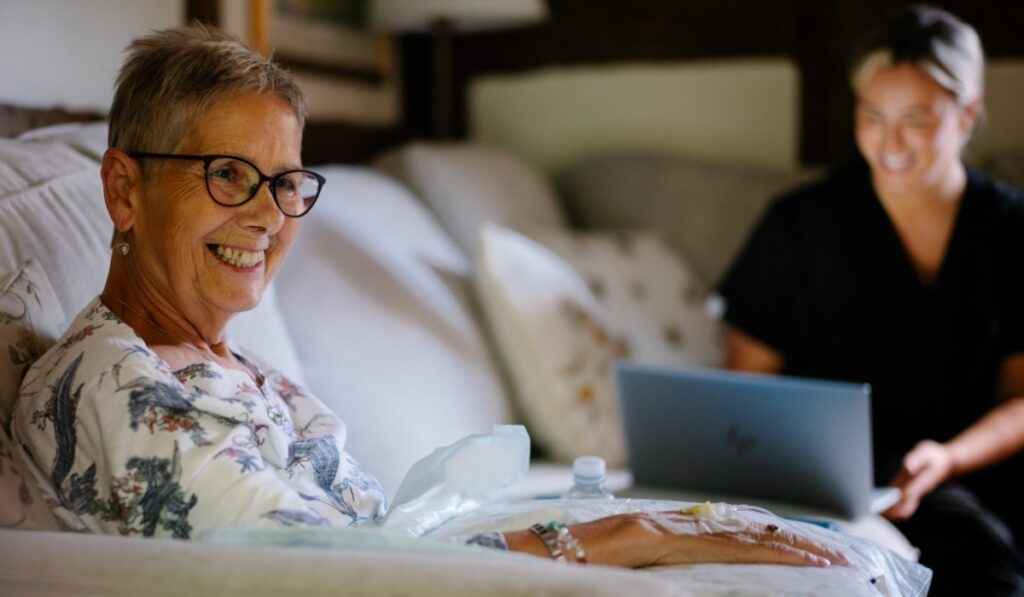
“Being at home suits me and my wife and our active lifestyle”
Lloyds Clinical Private Cancer Care: Ron’s story of living with Mesothelioma
Ron is from Ryton near Blaydon, in Newcastle, where he lives with his wife. Seven years ago, he was diagnosed with Mesothelioma. He told us about his experience of having treatment in his home, which started in November 2024.
“Seven years ago I found out that I had Mesothelioma. The immunotherapy that I was on didn’t seem to be working. Through my insurance claim against a previous employer, I was able to claim privately, which means that I can now access drugs that aren’t currently available on the NHS and have my treatment at home.
My drugs are delivered on the morning of the treatment. I get a delivery slot, usually between eight and ten in the morning. I check everything off in the delivery – usually 3 boxes containing two different drugs and all of the medication that the nurses will need. The nurses visit later that day. I know when they are coming and they’re never late. They’re lovely and it tends to be the same two or three faces, so I know them. My treatment takes about four hours, so we have a chat about holidays and life or whatever – it helps pass the time, as four hours is quite a stint!
It’s so much easier at home. Freeman Hospital is on the far side of Newcastle, so I don’t have to go through all the traffic, the parking and all the inconvenience of that side of it. Being at home to have my treatment means I can get a drink, go to the toilet and I’ve got all my comforts around me.
All the equipment for every eventuality
The nurses are so highly trained and experienced. They have all the equipment for every eventuality; it’s just like you are in a hospital. Everything is done by the book. A few times the nurses came with an assessor – I’m a joiner by trade and I worked as an assessor for a while, so I know what it’s like observing people and making sure they work to standards. My wife is a mental health nurse and she understands that the nurses really know what they are talking about. It comes down to trust and I trust every person who comes to our house.

Time back for ourselves and each other
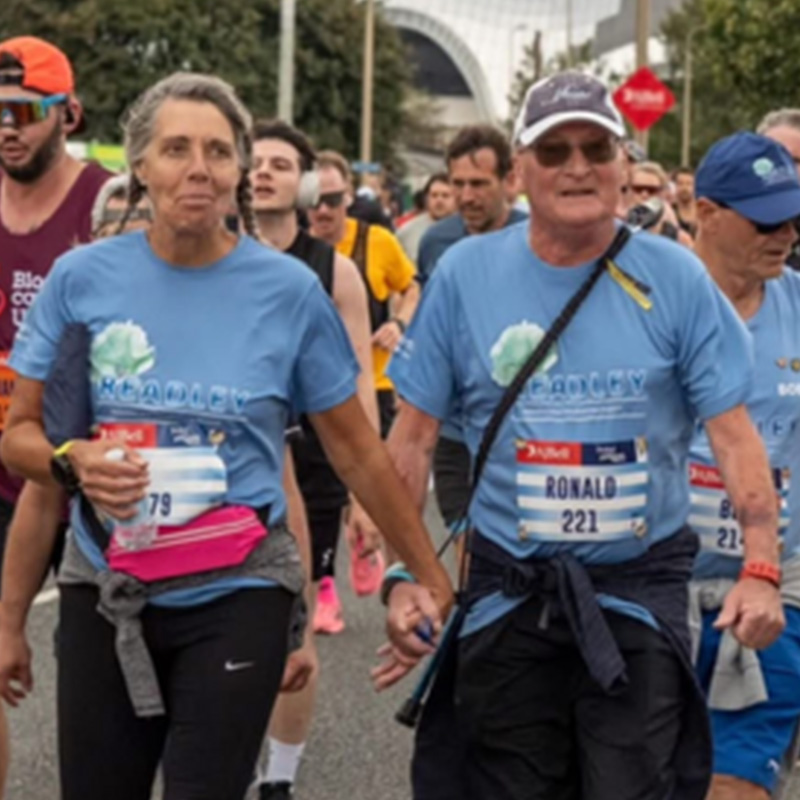
Being at home suits me and my wife and our active lifestyle. The nurses are so flexible – my treatment is on a Wednesday and that is also the day I meet up with some pals to go for a walk, so they arrange treatment around that. I’ve always been really active and fit and healthy. I’ve done the Great North Run every year since it started, which is 44 times! They stopped my treatment briefly, so that I could take part. The muscle wastage means I can’t run, but I can walk – I did part of it in a wheelchair, but I still did it!
Having my treatment at home, just like you would in hospital, helps us all. It frees up time for my wife too. She doesn’t have to drop me off or come with me to hospital. We both get that time back for ourselves and with each other. I go to a Mesothelioma support group and there are two other people with Mesothelioma, the same as me. I’ve spoken to them about how having treatment at home has worked so well for me. I think it’s fantastic.

According to Cancer Research UK, more than 2,700 people are diagnosed with Mesothelioma each year in the UK
What is Mesothelioma?
Mesothelioma is a rare form of cancer that develops in the lining of the lungs, abdomen, or heart. Mesothelioma occurs when inhaled or ingested asbestos fibers become lodged in the body’s tissues, leading to inflammation, scarring, and eventually the growth of cancerous cells. The most common type, pleural mesothelioma, affects the lining of the lungs and accounts for roughly 75% of all cases. Less common types include peritoneal (abdominal) and pericardial (heart) mesothelioma.
94% of Mesothelioma cases in the UK are due to workplace exposure. Most cases are diagnosed in people aged 75 and over, and men are affected more commonly than women.
Signs and Symptoms
The early symptoms of Mesothelioma are often subtle and may resemble other respiratory or gastrointestinal conditions.
Common signs include:
-
Shortness of breath or difficulty breathing
-
Persistent chest or abdominal pain
-
Chronic cough
-
Fatigue and unexplained weight loss
-
Fluid buildup around the lungs or abdomen
We know the benefits of cancer care at home
Our specialist cancer services ensure private medically insured and self-paying patients who want an alternative to hospital can start their treatment faster. We consider all cancer treatments, including those not currently available in hospitals.