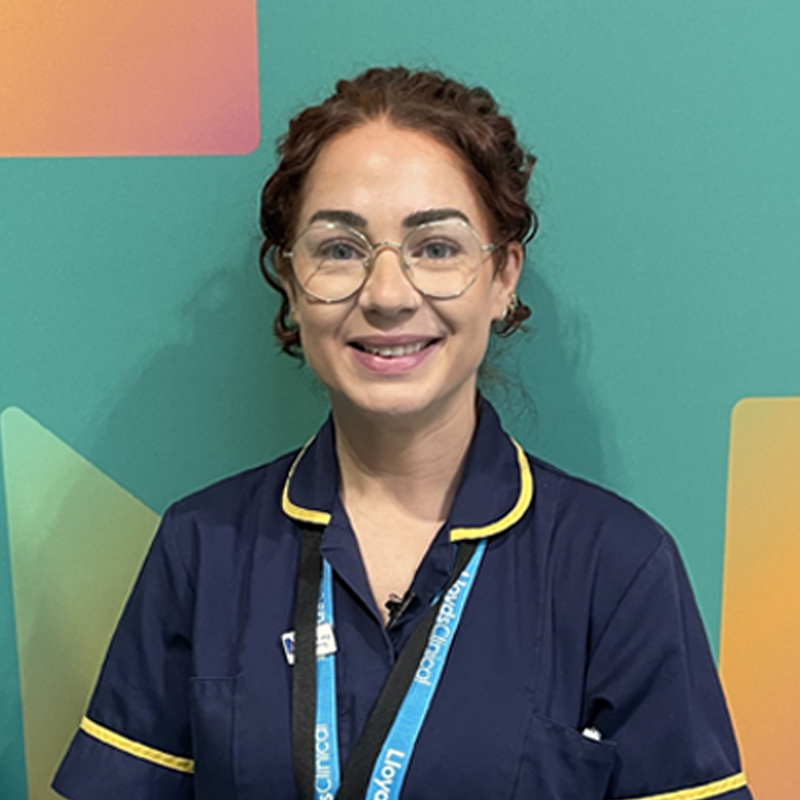
Meet Leoni Walker: combining clinical expertise with compassionate care
Meet Leoni Walker
Leoni has spent the last decade with Lloyds Clinical, but her journey into nursing began long before that. She was inspired to train after watching a close family member go through a prolonged period of illness and seeing, first hand, the difference nurses made to both the patient and the wider family around them.
Their care left a lasting impression.
It was not only the clinical skill that stayed with her, but the reassurance, compassion and steady support they brought during a difficult time. That experience led her into nursing, and it continues to shape the way she works today.
She began her nurse training in 2008 and has since built experience across a range of clinical settings, developing a broad skill set and a strong commitment to patient-centred care. Lloyds Clinical appealed to her because of its focus on delivering high-quality care in the community and supporting patients with complex and often long-term conditions in a way that fits more naturally into their lives. Now, as Lead Nurse for Rare Disorders, Immunoglobulins and IV therapies, she plays a key role in shaping how those services are delivered.
What she enjoys most about her role is the chance to influence services in a way that leads to better care. For Leoni, improving practice, strengthening patient safety and helping shape services so they are both clinically effective and genuinely centred around the individual is deeply rewarding. Knowing that the work she does can improve both patient outcomes and the way patients experience their care is what continues to motivate her.
“A big part of what I do is ensuring that patients with complex needs can receive treatment in a way that fits into their lives, while maintaining the highest clinical standards.”
Why patients value our care
One memory from her earlier role as a nurse delivering treatment in patients’ homes still stands out. She regularly supported a family in which several members were receiving treatment. Each time she visited to administer infusions, she was reminded that nursing is never only about the treatment itself. She was helping in a practical way, but she was also offering reassurance, continuity and emotional support during a very challenging period in that family’s life. Becoming a trusted presence in that journey reinforced for her how important compassionate, holistic care can be, not only for the patient but for everyone around them.
That belief runs through the way she talks about care outside hospital. Receiving treatment in a familiar environment can make a significant difference to the patient experience. It can reduce stress, preserve a sense of normality and make care feel less disruptive, whether the setting is a home, a school or a workplace. It can also create a greater sense of collaboration, allowing patients to feel more involved in their own care and more confident in the treatment they are receiving. For many people living with long term or complex conditions, that can have a meaningful impact on comfort, independence and quality of life.
For Leoni, great patient care means combining high-quality, evidence-based clinical practice with a genuinely collaborative approach. It depends on strong relationships, not only between nurse and patient, but across the wider teams involved in a person’s care. She sees coordination, consistency and responsiveness as essential to good outcomes, but she is equally clear that patients need to feel supported and valued throughout their journey. Clinical care has to be safe and effective, but it also has to feel compassionate and personal.
“What often surprises patients most is how seamlessly treatment can fit into their everyday lives.
Many initially expect it to feel more clinical or disruptive, but instead they find they can continue with their normal routines, whether that’s being at home with family, attending school, or even working.
Patients are also often surprised by how personal the care feels. Receiving treatment in their own environment allows them to build strong, trusting relationships with their nurse, which can make a significant difference to their overall experience.
For many, it reduces the stress and time associated with hospital visits, and helps them feel more in control of their care. That sense of comfort, normality, and independence is something patients don’t always expect, but really value once they experience it.”
How our nurses support NHS teams and healthcare partners
That emphasis on collaboration is central to her role. Leoni works closely with consultants, hospital teams and wider healthcare partners through regular service reviews, nurse-led reviews with referring centres and day-to-day clinical support where questions arise.
She sees that ongoing dialogue as vital to making sure care remains well coordinated across settings.
One example that stands out involved strengthening communication between Lloyds Clinical’s nursing team and a referring hospital team when there was a risk that changes to a patient’s treatment plan might not be shared quickly or clearly enough.
By introducing more regular, structured updates and ensuring the team was available for ad hoc clinical queries, continuity improved, risks were reduced and confidence in the service strengthened for both the patient and the professionals involved.

What makes Lloyds Clinical nurses different
When asked what makes Lloyds Clinical nurses different, Leoni points to the level of autonomy, expertise and adaptability required to deliver complex care outside hospital. Nurses often work independently, which demands strong clinical judgement and the confidence to respond to each patient’s needs in real time. Alongside that, she believes there is a real commitment to building meaningful relationships with patients and families, which allows for more personalised and more holistic care. Supported by a culture of collaboration and continuous development, Lloyds Clinical nurses are able to combine clinical expertise with compassion in a way that leaves a lasting impression.
For nurses considering a similar path, Leoni describes it as a unique and rewarding way to practise. Delivering care in patients’ homes allows nurses to build stronger relationships and see more directly the difference their work makes in everyday life. It calls for autonomy, adaptability and confidence in clinical skills, but it also offers the satisfaction of helping patients maintain their independence while receiving complex, high-quality care. For Leoni, being part of the Lloyds Clinical team means working alongside people who are deeply committed to improving patient experience and outcomes, and who share a strong sense of purpose in everything they do.