Behind every HPN prescription: the clinical decisions that make personalised care possible
“No one patient is the same. Everyone has different requirements.”
That simple observation from our recent HPN roundtable captures one of the biggest challenges, and one of the most important principles, in supporting people receiving home parenteral nutrition.
Why personalised care is essential in HPN
HPN is highly individual.
During Home Artificial Nutrition Week, colleagues from nursing, pharmacy and pharmacy technical services came together for a roundtable exploring intestinal failure, the development of HPN formulations and the expertise required to support treatment outside hospital. The discussion provided a detailed look at the clinical and practical decisions that sit behind every patient’s regimen.
Understanding intestinal failure and HPN
Intestinal failure occurs when the gastrointestinal tract cannot absorb enough nutrients or fluids to meet the body’s requirements. Patients may therefore require intravenous support through parenteral nutrition, intravenous fluids or a combination of calories, micronutrients and electrolytes. Causes vary and can include short bowel syndrome following surgery, alongside other gastrointestinal conditions.
Personalisation within clinical limits
The treatment required by one patient may look very different from that needed by another.
Individual nutritional requirements, fluid needs, electrolyte levels and wider clinical circumstances all have to be considered when an HPN regimen is developed. For patients who are fluid restricted, for example, teams may need to work within a much smaller volume while still trying to meet the patient’s nutritional requirements.
That can create a complex balancing exercise.

Personalisation within clinical limits
Creating safe and effective HPN formulations
During the roundtable, Pharmacy Technician Mandy Sibley described how formulations can be created using individual components or by supplementing multi-chamber bags (MCBs), depending on the prescription and patient requirements.
In each case, formulation decisions also have to take account of stability.
Compatibility between ingredients matters, and there are limits around components including lipids, calcium, vitamins and trace elements. Stability data, manufacturer information, external expertise and internal knowledge all help inform what can safely be compounded.
Sometimes the formulation initially requested cannot physically be produced within the required volume or stability parameters. In those circumstances, teams work with the referring Trust to explore alternatives.
Collaboration across the HPN pathway
That collaboration is a fundamental part of HPN.
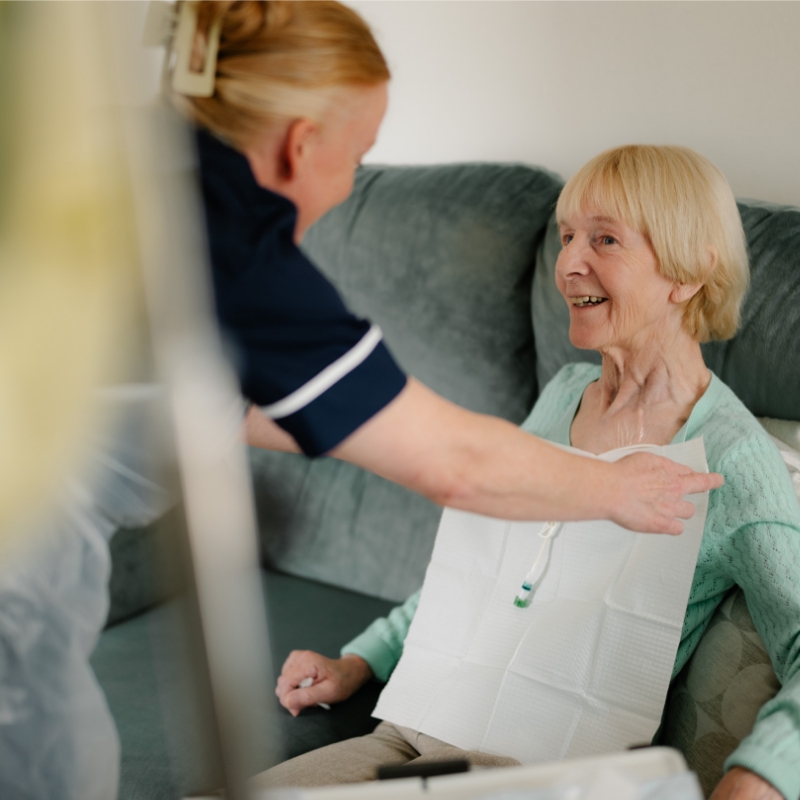
Hospital clinicians understand the patient’s clinical requirements. Pharmacists and pharmacy technicians bring specialist formulation and stability expertise. Nurses understand how treatment will be administered and what it means for the patient in practice.
Bringing those perspectives together helps teams find an approach that is clinically appropriate, technically possible and workable for the person receiving treatment.
Looking beyond the formulation
The discussion also highlighted why personalised HPN cannot be considered solely in terms of the contents of the bag.
How treatment fits into everyday life
How treatment fits into a patient’s life matters too.
For example, some supplemented MCBs may be suitable for use when a patient is travelling and does not have access to the same refrigeration arrangements. Delivery frequency can also make a practical difference, particularly for patients who have limited storage space at home.
The roundtable discussed how supplemented MCBs may currently have shorter stability periods, which can mean more frequent deliveries for some patients. Teams continue to explore where arrangements can be optimised so that, where clinically and technically appropriate, treatment places less disruption on everyday life.
Those details may appear small when viewed alongside the clinical complexity of intestinal failure, but for someone living with HPN every day, they can make a meaningful difference to how manageable treatment feels.
Why shared expertise delivers better patient outcomes
One of the clearest messages from the discussion was the importance of collaboration.
Developing and delivering HPN safely is never the responsibility of one profession or one organisation. It relies on clinical and technical teams sharing knowledge, challenging assumptions where necessary and working through problems together.
That is particularly important as patient needs change.
A formulation that works at one stage of a patient’s journey may need to be reviewed later. Clinical requirements can evolve, practical circumstances can change and different treatment options may need to be considered.

Putting the patient at the centre of every decision
For Lloyds Clinical, supporting HPN patients means bringing together that expertise while keeping sight of the person at the centre of the pathway.
As we continue to develop our HPN services, including our work around personalised support and flexible MCB provision, the principle remains the same – treatment needs to be shaped around the individual receiving it.
The science behind HPN is complex. So are the lives of the people who depend on it.
Good HPN support requires us to understand both.